How much AI is too much AI? When have you gone too far?
This is a story of how I used AI on Twitter and what it taught me about posting AI generated content.
In April of 2023, AI generated images were just getting good enough to blur the line of easily identifiable as AI generated. The quality passed a threshold to be more useful.
I had the idea of using this new capability to re-invigorate a neglected Twitter account. The plan was to post 3x a day, using AI to help write and provide images for the posts. It would take less time, and I’d batch up and schedule a week of content at a time. 7 days times 3 per day = 21 posts created every Monday morning. I’d try to keep the time commitment for this below 2 hours per week.
To be fully transparent – I used my personal account to comment about how each post was created, and share more information about the performance of this test.
So what happened?
325k impressions over 60 days of experiment
This took what was an account that reached zero people, and instead we reached over 300k people with our brand. Considering the only cost was my time it seems like a decent return.
However, you’ll immediately notice that big spike. This was a learning moment. Twitter’s algorithm is not geared towards discovery like TikTok – it’s not easy to ‘go viral’ with a post unless you have a big follower count.
You can see that the posts from April 1st up to mid April received just a trickle of engagement.
While the increase in posts saw an increase in impressions as a result (and no complaints) our organic reach was limited by our follower count. Around April 20 the strategy shifted.
Instead of posting to the public feed, I’d spend most of the time going after trending topics and conversations. Jump into the replies with a relevant on-brand take that contributes some fun into the conversations that were already happening.
Lesson: Use social media to be social.
Tapping into the attention that already exists proved to be a 10x multiplier. In contrast, yelling into the void and expecting someone to hear is not a great strategy.
The great thing is that AI enabled a much broader set of conversations than I could have handled on my own, and add a comment or graphic that was more on point and stood out. I could jump from a reply about what happened at the Oscars and then right into a science question before dropping some heat on a live play-by-play of the NBA game.
AI can fill in the knowledge gaps about who the actor is, what position the player has or parsing some research paper while also mixing in jokes and adding creative flair. It’s super-human, and a great example of how a person with AI can do better than either on their own.
Using an LLM to ask “What is an on-brand response to this tweet: XXXX” was all that was needed to get the inspiration for a quick reply. And if it made sense – “Write the description of an image to go along with that reply” which could be converted into an image in a minute or two.
With this kind of workflow, I could write more timely, more engaged and more relevant replies. Instead of 200 impressions on a post, some of those replies got 10,000+ impressions by grabbing the attention of bigger accounts.
This is how I used AI to wield social media with super-human skill.
If you liked this story – please share it with your social media manager.
When the hype of GPT-3 landed and everyone was proclaiming that AGI was around the corner and Minority Report style targeted advertising was almost possible, I wanted to see what was actually doable.
So I did, I grabbed data about a small subset of customers, and wrote a script that would use OpenAI’s APIs to write a custom email to each and every person. Hundreds of personalized emails materialized in a matter of minutes, and I used Klaviyo’s APIs to push these custom blocks of text to the subscriber record in the email platform.
Would these emails avoid getting considered spam due to having more unique text in them?
Would they avoid the promotion filters if they were written to be more personal?
I pressed send, and it worked.
Did I try it again? No.
Not because the results weren’t there, but because it was so tedius to do.
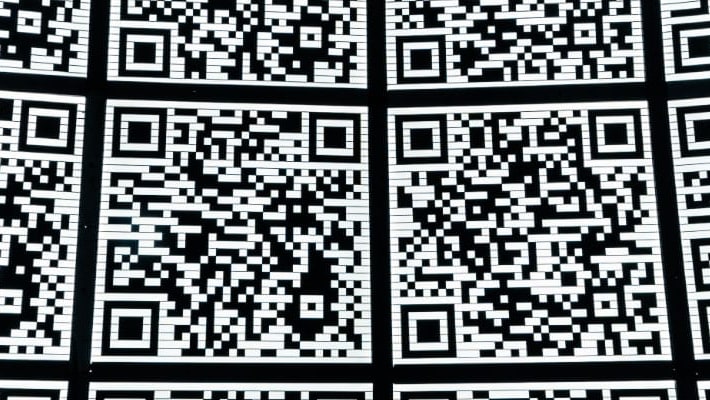
Most people use QR codes as a way to print a link. But they can be so much more.
Overview
QR codes are like the UPC scannable barcodes we are familiar with except they store information in 2D (up-down and left-right). They usually store a URL or link.
The codes are designed to be quick and easy for mobile phone cameras to scan them – even if rotated or partially obscured.
This document contains QR Code best practices that apply for lots of use cases but are particularly useful for ecommerce businesses.
The Big Idea
💡 QR codes should use links that include context about where the QR code will be placed, and NOT where you want the link to go
You accomplish this with an updateable redirect link. Which provides 3 important benefits:
You can change the destination of the link in the future.
Shorter links result in smaller QR codes, which are physically smaller, and quicker to scan.
trackability – knowledge of which codes people are scanning
Tip: Use a redirection tool that works with your existing web domain name. This is because the camera app will display the domain to hint at the destination before you click on it.
To be a bit more concrete. Lets say you sell a blue water bottle, the SKU is BWB200 and the QR code will be placed on the bottom permanently. you could create a link like :
https://example.com/qr/BWB200/BTM
We’ll get to where that goes a bit later. The important bit is that this link tells you the person scanned a qr code, on that particular SKU and it was the one on the bottom of the bottle.
Having a naming convention can help later if you need to do bulk updates to links or to sort and understand everything at a glance, while also being short.
If someone goes to this link – you know they are physically holding your product. You use a different QR for a billboard ad, or business card – even if they all go to your homepage.
How to Make QR Code Images
There is nothing particularly magic about making QR code images, you don’t need to purchase anything for it. There are countless free webpages that generate QR codes you can download without watermarks.
Using one of these tools, you can create the QR code by providing a URL (ex: https://example.com/qr/BWB200/BTM) and downloading the resulting image file.
From there, you can work with it in your graphic program of choice. (you can put logos in the middle and cover a small number of dots in some cases)
Use a CTA. Ask people to scan the code, and give an indication of what it does. A QR code on it’s own will rarely get scanned.
⚠️ Always test the QR code with your phone to make sure it continues to work as expected before publishing or committing it to be printed.
Use Redirects
So you’ve got a link that you want to use and redirect to the ultimate destination that the user should land. Lets figure out just what is possible here, and how to set it up.
Consider the QR code on the bottle example from earlier. The person is holding that bottle when they scan it, they may want cleaning instructions, or to check the warranty, or to buy another for a friend. Perhaps in the future, you’ll have a dedicated page that’s mobile friendly specifically for the most common customer actions in this moment. For now, lets just go to the PDP.
A redirect lets us get the printable QR well before the pages exist, or to change the pages in the future if it needs to be optimized.
Let’s say the product page is https://example.com/product/bottle
you can put that as the destination for the redirect and it’ll work, but you won’t know if people are scanning the QR to get to the page. It’ll show as an unhelpful “Direct” in all the analytics.
💡 Use UTMs on the redirect destination. It’ll help you see how often these QR codes get scanned from within Google Analyics, Shopify reports or other stats collecting tools.
What would be more helpful is to expand the destination with some of these UTMs like:
Now you’ll see in Google Analytics, under traffic aquisition, how many times that drives traffic, how much of that traffic creates sales and you can dig into many other factors – device types, demographics, bounce rates, etc.
Side Note: For links to Amazon, there’s a couple things to keep in mind which are detailed further down.
What are UTMs?
UTM is a convention for extra parameters on a link to track the effectiveness of marketing efforts. The common parameters are:
utm_source (e.g. newsletter, twitter, google)
utm_medium (e.g. email, social, cpc)
utm_campaign (e.g. fall2023, fb_campaign32)
If you haven’t spent time on UTMs it can be a worthwhile exercise to organize and develop standards for your business so that across all places things get grouped for easier analysis.
Creating Shopify Redirects If you run your store on Shopify, it has redirects built in (no app required): https://admin.shopify.com/admin/redirects Here’s a screenshot of what that looks like for the previous example, notice that it starts from the ‘/’ and doesn’t include the full domain name part of the URL.
Once you save that redirect, if you’ve followed along all the steps you now have a QR code that redirects to the PDP. Yay! 🎉
Special Shopify Links to Know AboutApply A Discount Link that auto-applies a discount code: use example.com/discount/CODE to go to the homepage of your site and have the discount already applied in the person’s cart.
Straight to Checkout Link straight to checkout (buy button link) with item and (optional) discount code: example.com/cart/<variant ID>:<quantity>?discount=10off
Could be useful on a QR with a “re-order” CTA
Find these links using the “Create a checkout link” action on a product
Creating Redirects to Amazon If you have shopify or wordpress (or another) service hosting your website, use that for redirects, and just put the full URL in as the target including https://amazon.com part. If you do not have a hosted website to use there’s two options:
A paid service that hosts the redirects – bitly.com is an option, and has an integrated QR generator. But keep in mind that the codes will show bitly instead of your brand, and you have to keep paying or you can lose access to features, and possibly break existing QR codes.you link directly to Amazon pages, which runs the risk of pages moving and the QR going to a 404 page at some point in the future.
⚠️ Be aware of Amazon terms for directing customers who buy there to another web store.
Special Amazon Links
Brand Referral Bonus Links If you have a brand registered with Amazon, you have the ability to generate brand referral links which pay a commission to offset some of your Amazon sales fees. For all links, you should try to put them into Brand Referral Bonus, the savings can be very significant. Run the links you generate below 👇 into this to get credit for all the traffic you send to Amazon.
Store Insights Links You can link to your store with trackable URLs. This can be a great option because store pages can be treated like a landing page and have fewer distractions than on the product details page.
Review your purchase The page https://amazon.com/ryp is where customers can leave a review for their recent purchases.
Direct Add to cart, Search pages and other It’s possible and can be useful to link to searches for your products (Two step URL) or to link directly to a cart with products in it. Helium 10 has a free tool to help you make these links: https://www.helium10.com/tools/free/url-builder/
QR Code Use Cases
Quick Reorder a Consumable
Got a consumable product like a food item, water filter, cleaning supplies or stationary?
Putting a QR code on the product or the product packaging itself means that when someone scans that QR code, they are likely holding your product in their hand. Consider if a quick reorder is what could they be looking for.
You can go straight to the PDP, or even test automatically adding product to the cart.
Ask for a Review
Instructions for getting a review are difficult to write out. A QR can get straight to where the review can be given.
Insert cards can be a great way to ask for customer feedback. Just be sure to stay within Amazon guidelines.
QR Code on the Packaging
Putting a QR code on the product or the product packaging itself means that when someone scans that QR code, they are likely holding your product in their hand. What are they looking for? product information, a manual, perhaps how to order more.
Consider what they’re looking at and where that person might be when they scan the code.
If this is on the front of the outer packaging and the product may be placed in bricks and morter stores, then the person may be looking at it on the shelf, in which case, bringing up a page with product reviews and information is a strong move to help move that person to purchase.
OOH Advertising
Tracking out-of-home ads can be difficult, and QR codes are no perfect solution, but they do give an indication of engagement with an ad. They make billboards actionable CTAs that can drive immediate sales.
Print Advertising
Similar to OOH, print ads often mention web addresses, they sometimes use Discount codes to track the effectiveness of an ad. QR codes provide another way to measure engagement with print ads.
YouTube and Video Advertising
The content people watch on TV can be hard to action. If you watch videos from your phone you can easily get to the “links in the description”, but when watching from 7ft away on the TV a QR code can be more actionable than asking people to type in or search for a web address.
If you do try this, recall the Coinbase superbowl ad, where the QR was on the TV for enough time for people to get their phones out and scan it.
Networking
QR codes can be used to store a “vCard”. A digital business card that can directly add your contact information into someone else’s contacts list on their phone. With a single click they can get your phone, email, full name, company and other details.
It can be a good way to get your info into people’s phones, without typos or having to write it out. Add one to your business card.
Use one of the QR generators listed earlier, some of them know how to generate this format of QR Code.
Staying Organized
If you are following the suggestions here, you may find that you have A LOT of QR codes to build links for, to generate QR codes for and pass all these to designers for implementing into labels, stickers, packaging, or advertisements.
A shared document like a google sheet, notion page or something else that works for your team is a good place to keep everything and refer back to.
At some point in the future, you’ll be doing an SEO restructure of urls, changing platforms and break a bunch of redirects. You’ll want to have a list of all the QR codes that exist in the wild to double check they continue to work.
The Shopify and wordpress redirect features include the ability to upload spreadsheets which can make bulk changes much more manageable.
🎁 Advanced Bonus: if you need to create many tens or hundreds of QR codes, do it with automation. I have a Python script that generates QR codes from a spreadsheet available on GitHub https://github.com/mfwarren/AmazonScripts/tree/main/qr_codes
QR Code Best Practices
A QR code is a camera scannable link.
Use a short link that indicates where the code will be placed, not where it’s going.
Create the QR code with that short link.
Use a redirect to expand that short link into one that includes UTMs for analytics, referral codes for earning additional $, add discounts, and ultimately delivers the person to the destination.
Use QR codes, on the product, the packaging, on insert cards, business cards, and in adverstisements
Use a CTA next to the QR code
Final Call to Action
Know some QR tricks not mentioned here? Connect with me on Twitter: @Matt_Warren
Brand marketing is the process by which a name/image/logo/product is associated for commercial purposes.
This process is fundamentally the same as how we understand new words and are able to bring new words into our vocabulary.
When we learn new words, we remember them best when there are multiple modalities and existing concepts to which we can ‘anchor’ that word to. The more connections and modalities the richer this web of associations can be and the stronger our memory is for recalling this new word in the future. This association works in both ways – we hear the word and it brings forth the meaning so we understand it, but also we see something and can recall the word to describe it.
Language learners can use this to learn a new word and retain it:
Hear the word spoken – ideally multiple times from multiple people’s voices and intonations
See visual representations to correlate to that word
Think of a story involving the word
Imagine a smell, feeling or other sensory connection to the word.
Think about memories, experiences, jokes, synonyms, homonyms, concepts or anything else from your mind to associate it with
The richer the web of connections the more likely you’ll retain understanding of, and recall the new word to use in the future will be.
The french word for grapefruit is pamplemousse. The hard way to learn this word is to have it on a list of other french words with their translation, you repeat it over and over for days. This is how I learned French in school. Invariably you’ll forget it. Instead, create something richer in your mind:
phonetically it’s similar to pimple moose – imagine a giant pimple on a moose in the shape of a grapefruit for a comical visualization of the word.
Search google images and look at lots of photos and drawings of pamplemousses.
Perhaps buy one to have, or get a glass of grapefruit juice
Recall memories of grapefruits in your life
With all these hooks to the word pamplemousse, it’s much more difficult to forget.
Now think of a brand as a new word and you want to teach this new word to as many people as possible. The difference is that a person learning french actively works to remember that word, but branding is trying to teach a passively engaged consumer most of the time. Giving a dictionary style definition is simply not enough:
Facebook: A social network platform where people connect with friends and family they know to share and communicate.
This alone doesn’t fully describe the experience of using Facebook. Telling people what the product or service is just isn’t enough. There is much more to what Facebook is than just that single sentence. If you base your judgement on a simple statement like that it might get tossed into other associated buckets of things you already know about – just another social network, just a buzzword definition, or just so bland that you already forgot it. We need something richer to engage and remember it.
In the case of a brand we want to anchor a group of things together to create the web of associations with a purpose. On the design side we create a logo, language, colors, and art style that are a visual unit connected together. You associate emotions and feelings, stories, tastes, smells and sounds into the mix. And it centers around the brand and its product or service so that this new word is given a meaning.
A brand can either be purposely built or be something more organic. Branding firms will do ground up brand design to choose the elements that come together and represent the brand. Or customers can create their own associations from interacting with the product and service and the brand can be discovered by everyone independently.
There is no correct approach between those two – except that if the designed branding conflicts with the reality of the product or service you’ll probably end up with customer complaints from not meeting expectations.
Now, when people talk about Brand Marketing, they usually are referring to a style of ads where the product and sales elements take a backseat to the jokes, action or story. The goal of the ad is to create or reinforce these associations rather than to immediately sell the product.
The thinking here is that when the person is actually ready to buy, the association is embedded enough that the product is what they recall. Thirsty? Coke, Thirsty from exercise? Gatorade, smell grease? McDonald’s.
The reality is that force-feeding brand associations to people passively is expensive. It takes many times from learning a new word until you use it naturally; similarly it takes repeated messages to teach people about a brand. It has to be maintained over time or you start to forget. Paying for the media placements to do this broadly is extremely expensive.
Going after broad concepts cannot be done effectively without also having broad distribution. To anchor an association like Thirst -> Coke the product must be available so that when a person is thirsty they are able to buy it. If on the other hand the stores only have Pepsi, then not only is the ad spend wasted, but Pepsi is now reinforcing their association to thirst with the smell, taste and tactile feel of their product.
The payback is hard to measure – if it works people will buy weeks or months later. The customer may not even be aware of the influence of the brand into their purchase decision. So there is some trust required that the ads work in order to keep them going long enough to see the results.
Because of the time and money investment to really solidify the brand in people’s minds these approaches are difficult to translate to small businesses. For branding on smaller companies you’re going to be niching down to smaller communities – maybe this helps. But it’s still difficult to even consider a pure branding play without the cash to wait weeks for any proof.
Instead, try to do the brand focused elements of marketing on PR pieces, and websites. Be consistent with the use of colors and fonts. Have a name that already elicits the kinds of associations you want to have. These form the basis of a brand. Ensure the product is easy to purchase, and that all interactions have the same cohesive design.
The Brand and the product have to go together or else the most critical connections won’t be created in the mind.
A large part of branding for a small business is just applying the design elements with consistency across everything that customers see. This starts to create the richer set of associations we’re hoping for with a brand.
For the most part, brand marketing is not a game for small businesses to be in. Stay on-brand for social media posts, perhaps use brand marketing style content organically, but save the brand marketing ads until after distribution is fully saturated
The Science and tech museum hosted an exhibit about Leonardo da Vinci which we went to go see over the weekend.
One thing for sure is that it made me feel inadequate. He was able to get so much stuff designed and built that it just makes my efforts to be productive look like a snails pace. Designing everything from military weapons to musical instruments, flying machines, and cities. Then still having time to become a master painter. Truly prolific.
The exhibit left me with more questions than answers. How the hell did Da Vinci accomplish so much. There must be some secrets. It got me curious enough to order a copy of Walter Isaacson’s biography of him to try to find out more.
One question that entered my mind was: Is it even possible to have another Leonardo Da Vinci today? There is no question that our access to information has improved greatly since his day, but it is also incredibly difficult to have the time dedicate to deep thinking between jobs and abundant distractions.
What do you think? If someone with the aptitude of Leonardo was born today would they achieve the same astounding historical significance or would they be found in a cubicle somewhere?
Back in December a friend and I decided to try our hand at a simple e-commerce business. Drop-shipping lighters from China. We built a brand and website to sell the lighters and created ad campaigns and managed to sell about a dozen lighters in the lead up to Christmas.
That first dozen sales lead to quite a few important insights.
Drop-shipping is a terrible way to build a sustainable business. It’s so easy to do, that the barriers to entry are low enough for anyone to find and undercut you with ease. Shipping times are unacceptably slow and out of your control. Quality is hard to assess.
People really dislike slow shipping. About 50% of our sales resulted in hands on customer support to calm nerves. Getting abusive and insulting emails is disheartening and not fun.
Running ads on Facebook is subtly difficult. Even with what seems like great margins on the product itself, we found ourselves spending $50 in ads to sell a $30 lighter.
But in an effort to continue to improve and crack this nut of e-commerce we took a break to assess the situation.
To fix the problems with drop shipping business model we decided to do a custom product. We designed a lighter and found a manufacturer in China with the molds for a lighter and the ability to mass produce a couple hundred lighters for us. Bulk ordering like this cut our per-unit cost in half, which was a nice bonus.
A couple months later and I got a couple hundred lighters delivered to my house. This was the second thing to improve on. Shipping from within North America will help to remove the bottleneck at the border and by doing the fulfillment myself I have the option of easily doing pack-ins, and testing shipping options. Solving the shipping issues should alleviate our biggest customer support problem.
Finally, advertising is critical, and it unfortunately just requires copious amounts of testing and fine tuning to discover the ads that work with landing pages that convert. This will continue to be an avenue to learn more on and continue to do better with. But with several hundred lighters ready to ship sitting on the floor in my office, there is now a definite source of motivation to sell these lighters profitably.
For those interested in seeing the result of all this, and in keeping with my space themed branding, you can find my Space Lighter at spacelighters.com
Over the years I have done a lot of things. much of that history is documented on this website, but much more isn’t. Many of my projects and business ideas were purposely separated from my personal site and I didn’t even reference them here or elsewhere. Some of that was to avoid sharing more failures, some was to give things a chance to prove themselves without the influence of family and friends.
I’m starting to have a change of heart. So I’m revisiting this website and will be slowly turning it into more of a nexus of every project that I’m working on and as a hub for the businesses that I’m launching.
You may have noticed that I added some links to the top level navigation on this page. The Moon To Stay Podcast is a project I’ve been working on for the last 2 months. Writing and preparing to record a series of podcasts all about the moon. When thinking about this project I originally thought about creating a new website for it – buy the domain name, build a podcast specific site to host the feed, and show notes.
The more that I thought about it though, the goals of the podcast is really about myself. Gaining confidence with speaking, interviewing, and recording. Showcasing some expertise and interest in the subject, and attempt to have some personal impact on humans in space. Doing a commercial style thing just doesn’t fit with that set of personal goals.
So I’m putting the podcast on this website.
The decision got me thinking about some of the other things that I work on that I haven’t really integrated with this personal blog. It’s important to celebrate your successes, and promote the work you do. If nobody knows about all the great things you do, then nobody will every find and use it. Communication of all these things is and important aspect of giving value to the world.
So one of the tasks I have for myself for the rest of January is to pull in a lot of different things to this website that show off things I am currently working on, and show some of the historical projects that have been done before.
I have been finding myself increasingly frustrated with the amount of American news that I see as a Canadian. On many topics it seems like I know more about what is happening in another country than in my own. A sad state of affairs. Most of these things are actually meaningless to me personally. Decisions made by American politicians are unlikely to cause me to change anything in my day-to-day, affect my decisions or something that I would have influence on. As a result, everything I know about American politics represents wasted neurons and wasted time.
American News is a drama. The characters and their emotional conflicts play a staring role keep us hooked like a soap opera. It draws us back in day after day to find out what happens. It stays on our mind through the day, speculating about what will happen next.
It made me think about all the media I consume.
Increasingly I have been withdrawing from all consumption channels. With Facebook, I have disabled all notifications, and log in less than once a month. I stopped using my feed reader and unsubscribed from everything that explicitly was world news related at the beginning of the year. Yesterday, I purged my phone of Reddit, CBC News, and Pinterest. The last of my consumption-only news feeds. Twitter is my only remaining source of outside information – but I’m careful about who I follow.
Either you control your brain, or your brain controls you. I want to make sure I am consciously in control of my own brain by ensuring that what goes into it aligns with my goals, that I reduce my risk of being influenced by media hype or fear tactics.
My goals are that I want to be building as much as possible. To focus on creation, I’m limiting the hours spent consuming.
The consumption that I am trying to do more of is books. The ideas in books have been baked for years before they make it to the printed page. They undergo multiple levels of review and editing before publishing, and they have the length to more fully explore and explain things. Choosing a book to read also aligns with the desire to control what goes into my brain which is very different from the lack of control we get from skimming through clickbait headlines.
As I have been cutting down on media consumption my phone has become less and less useful. I’m thankful of that, since it gives me more time in the day to be the author of my own future.
I got in on the pre-orders for the newly announced Google Home Minis
After playing around with the Amazon Alexa for the last few months I wanted to see what the differences would be.
It’s clear after just a couple of days with the Google Home in the house that it is MUCH better. Google has done an amazing job with their voice AI. A query like “tell me a scary story” works, and it additionally will play a spooky audio track behind the voice. It is less repetitive about repeating back things instead of just doing them too which seems a little bit more natural.
It still seems like early days for this technology, but as it continues to get better I can see it playing a bigger role in how we do things. The biggest hindrance to it seems to be the difficulty in learning and discovering what it can do.
Google should consider doing paid TV placements or something, otherwise the only way to learn the capabilities of these things is to go out of your way to find things to try.
For now, I’ve got my smart plugs/lights connected to it, spotify for music and my gmail account for emails, calendars, shopping lists etc.
I have been writing for my blogs for over 15 years now. A lot has changed with the internet in that time, and over the years I have investigated many ways to let my websites pay for themselves.
When Adsense was first announced I jumped on it only to find that it paid almost nothing to publishers like myself. Just pennies at a time would take years to generate enough given the traffic on my sites for Google to cut me a cheque. In all the time I had been running ads I think I had only ever received a payment once.
The dismal returns eventually made me realize that the ads were more detrimental to my readers than they were worth.
However, recently I have been on a mission to cut my budget for servers and part of that effort is to get my websites to pay their own way or else risk getting shut down. I started by experimenting with adding Adsense back to one of my blogs and found, to my surprise, that it earns enough to pay for its hosting costs.
I have extended ads onto this website, so that I pay less out of my own pocket to keep it running. Hopefully keeping these sites financially sustainable will be mutually beneficial to both me and the readers.