Category: Entrepreneurship

Founder journey, startup lessons, and business strategy

  • Launch with AI: The Agile Path to Success

    Launch with AI: The Agile Path to Success

    Maybe the algorithm is trying to tell me something, but I’ve heard a concept from multiple different people, in different ways over the last few weeks:

    “Now Not How” – Noah Kagan

    “Press Publish” – Colin and Samir

    “Do It Now” – Brian Tracy

    “Done is better than Perfect” – Sheryl Sandberg

    “Start Before You’re Ready” – Marie Forleo

    “Ready, Fire, Aim” – Michael Masterson

    “Be Demand First, Not Supply First” – Jason Cohen

    “Sharpen our ideas in the market; not in our minds” – Daniel Priestley

    Just Do it. But starting something new is daunting. There’s a million things that need to be done and limited time to do it in. So where do you start? You start with selling.

    Sell before the brand exists, before the domain is purchased, before the first line of code is written.

    Sales is the process of asking questions and finding out what people want. You get a commitment from them (often money, but could just be an email address) and then you figure out how to deliver.

    But this is a newsletter about AI. So I asked myself: Could AI take this advice and apply it in new and innovative ways to test demand even earlier, and reduce risk of failure even further?

    Yes, of course! What kind of AI Newsletter would this be if the answer was no?

    Some of best ways that AI can help de-risk a business or product as early as possible are:

    Critique and Refine Ideas

    AI is another voice to critique and refine ideas before presenting them to people. Ask what are the hard parts, what are the possible issues what are the steps to do it. Start your research with a chat. ChatGPT is often annoyingly positive, but the back and forth conversation can be a great way to help flesh out an idea, and discover things you hadn’t considered.

    Data Mining

    Some of the best business ideas are just improvements on existing products or services. Use AI to help comb through the competitors and find their pain points. What are the most important improvements that could give you an edge? AI can be great at helping with data analysis.

    Do More Yourself

    AI enables you to get more done yourself before needing to pay others. Get some initial copy written, gather some pain points and counter points for them, get brand ideas, color schemes, or suggestions about how to find and contact the target audience for your new idea.

    Faster to MVP

    When it is time to build, Auto-code, no-code solutions and AI tools make it easier to build a Minimum Viable Product. Use AI to think of brand names, domain names, or generate logos to bring your idea to life.

    Craft your best message

    Write better cold openers, more convincing emails, stronger arguments – not sure how to ask people to buy? Get some AI advice. You can get help building landing pages or writing video scripts. Because, how you present an idea can be more important than the idea itself.

    Do you have an idea? It’s never been easier to develop an idea and make it real. With social media it’s never been easier to connect with people and build an audience.

    With AI by your side, there are fewer excuses.

    “Act Now, Build as You Go.” – Matt Warren
  • Factorio

    Factorio

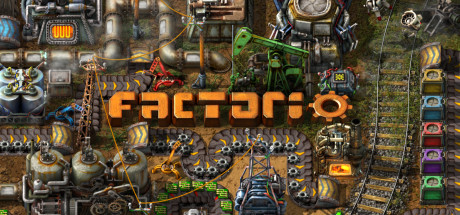
    I don’t often get to play video games, but I have put in 242 hours on Factorio. These are my favorite kind of games – resource management. And this one in particular focuses on one of my favorite things to think about – factories.

    The game features a complex tech tree of products that need to be built, and you design the full vertically integrated factory that extracts basic resources, refines them, and builds increasingly complicated parts. You get to layout all the complicated conveyor belts and machines to move things from one place to another.

    The most interesting things that end up complicating what you build tend to be around matching the production and consumption rates of various parts of the system – how many things fit on the conveyor belt, how fast can it deliver items, how reliable is the source material – does it need a buffer, what’s the ratio of particular production of sub-components required so you don’t have 1000’s of one thing, but none of another part.

    The game also has an element of battle with the aliens who occassionally attack and destroy everything (this is probably the least fun part of the game)

    There’s enough depth to the gameplay that I could definitely put 1000+ hours into it and still not be an expert in all the more advanced things like train management and control signals. And once you have explored the stock game, there’s a massive librarly of mods that can completely tweak everything.

    This is a game that teaches some valuable thinking skills. Managing complex systems and how best to abstract and organize things. I definitely got my money out of this game. Lots of fun. Highly recommend.

  • The Thesis Behind Psychedelic Water

    The Thesis Behind Psychedelic Water

    I posted this on Twitter a while ago, but this site is a good place to document these thoughts as well:

    1. Alternatives to alcohol is a growing market. There is a tailwind here as more people opt-out of consuming alcohol. I believe this is driven from disruption of the bar scene, zoom and video games replacing evenings out and health trackers clearly showing the negatives of drinking

    2. Psychedelic Water developed a proprietary mix of herbal supplement ingredients that is a compelling replacement for alcohol. It provides the relaxed happy and social benefits without the drunkenness, and hangover negatives

    3. Alcohol is bad stuff for us. it’s a habit forming drug associated with car crashes, domestic disturbances, poor sleep quality, hangovers, beer belly, loss of coordination, blackouts, hangovers, heart disease, high blood pressure, and worse. The world needs something better.

    4. The bold brand gets attention. It’s a double edged sword, but people hear about it and get excited. Our customers love what we’re doing & there are raving fans. It’s a product that people buy on-the-spot after hearing the 30 second elevator pitch.

    5. Psychedelics are becoming more acceptable and mainstream, as legality opens up we’re positioned to add new products. The brand also plays a role in normalizing and reducing stigma which hopefully accelerates legalization.

    6. Solving the problems with alcohol with something compelling will literally save lives, it’ll mend families and make people happier. There is a moral imperative to the mission of Psychedelic Water. That’s important

    So yeah, Psychedelic Water is an important company that needs to exist. The mission matters. The impact can be huge. That’s why I left a good job to work on Psychedelic Water.

  • Write down what you do

    Doing a little Journaling to document all the things you do in a single day can have an eye opening feeling.

    Yesterday, at around 5pm I started to write. At first, it felt like I hadn’t done much that day, but as I started to write out all the things that happened the list got longer and longer. Some of the items were decent wins – progress on the home renovation, grocery shopping, writing an investor email, baked cookies, caught a mouse and the list goes on.

    I looked at my partner and said “we got a lot done today”

    She replied “No we didn’t”.

    Writing it out gave me the hindsight to see just how many little things were accomplished that day. Before starting to write it out the day emotionally felt wasted, afterwards I had that emotional high from a sense of accomplishment.

    And all it took was a few minutes to reflect on the day and write it down.

  • Playing a Part in Re-Shoring

    One thing that has become abundantly clear over the last year is just how fragile our global supply chain is.

    • Covid lockdowns froze up the train yards and docks creating a shipping backlog, spiking costs and adding delays on all imports
    • hoarding of toilet paper made it a scarse resource
    • Snow in Texas disrupted all vehicle traffic for weeks
    • National first interests restricted availability of PPE and vaccines
    • ransomware on gas pipeline triggered a run on gas stations and fuel outages
    • Suez blockage prevented $9.6B worth of trade
    • Chip shortages are causing car factories to furlough workers waiting for parts
    • Lumber prices spiked 4x

    We discovered that our globalized marketplace based on finding the best prices for things wherever in the world they can be done is more fragile than it should be. Instead of being globally distributed and efficient it is focused centralization and adds dependence on a lot of risk factors. Clearly we should be finding solutions to add resiliancy to global supply chains.

    Resiliancy comes from having multiple options available and the flexibility to quickly change suppliers that are located in different countries. The closer businesses can be to their suppliers the lower the logistical risk. For many decades the focus on local commerce has been on food (at least here where I live). “Buy local” often refers the farmers markets for fresh locally grown produce and for artisan produced wares.

    Much more needs to be done and it is something I’d like to find a way to play a part in.

    There is a real need to fill in the gaps on the production of products where we rely heavily on imports. But that’s such a wide open problem that it’s hard to know what actionable things any of us could do to help. Some areas I’m trying to brainstorm on:

    • Is there something that could be done to make adding robots to factories, quick, easy and less daunting?
    • Could something be built to help find suppliers and lower the barrier to getting deals done?
    • Are there any industrial machines I could buy to scale up my own manufacturing business?

    Over the next few years I think and hope that investment money will allocate to solidifying local supply chains for the critical goods that have been off-shored. Bring that critical stuff back while remaining competitive through the use of more automation. It’s a wave I’m looking for a way to participate in.

  • Finding Winners

    There are lots of stats out there about how many businesses fail. It is astounding that something close to 9 out of every 10 businesses fold in just a few years. With each of those businesses there are smart ambitious people with the best of intentions, plans, and money to get things off the ground.

    With odds like that it’s amazing anyone every tries to start their own business right?

    But from a different perspective, with those odds and the potential rewards of a success why doesn’t everyone keep trying to start businesses?

    Every time you tackle a challenge like starting a new venture there is a tremendous learning curve.. how to hire/fire, how to raise financing, how to balance sales and marketing, what are your strengths and weaknesses, what should be delegated or contracted out. Nobody has all these skills in grade 5. There are no naturals. Everyone needs to learn.

    With that context it’s easy to understand why early attempts to start something have a high likelyhood of failure. Most people need to learn by doing and it’s easy to make lots of mistakes before you’ve mastered the skills.

    If one out of every ten lottery tickets was a winner would you keep buying tickets?

    matt warren

    I think I’ve scratched off more than my share of losing tickets. But with each loser my confidence has improved in specific areas.

    I think I’ve got a winner on my hands now.

  • Canadian Manufacturing

    Over the last couple of months I’ve been giving some thought to how the manufacturing business works, specifically in Canada. It’s been driven partly from things that I’ve been trying to buy, partly from wanting to try my hand at small scale production of something in the garage and also because it’s such an important sector of the economy that’s been struggling.

    There’s an unintuitive mismatch of economic incentives for supply chains. Retailers often treat their suppliers as trade secrets, sharing information about where they buy products from can have several negative impacts. For one, if someone buys the same products they could become a direct competitor and start pushing down prices. Secondly, the supplier may have less product available for them if others start placing orders.

    Up the supply chain the same things continue to happen. Suppliers are tightly held secrets. If you want something you should buy it through the downstream company.

    In comparison, the chinese manufacturing industry has found a way to unlock these barriers to efficient commerce. It has become so much easier to find chinese suppliers that even for simple components like standard metric bolts I will order them all the way from Guangzhou instead of HomeDepot.

    Canadian manufacturing seems to need incentives that align better with the whole sector, and the national economy at large. It’s a bigger challenge than seems feasible for me to have any impact on, but nevertheless the mental wheels are turning to see if there is something that could make Canada make again.

  • Value of Vision

    In business, when talking about writing a business plan, or when a consultant evaluates a business, sometimes a vision or mission statement are things that get discussed.

    For a long time I have looked at these kind of things as fluff. It’s a bunch of people wordsmithing a document that will never be read outside of the announcement that it has been completed. YAY! The people writing the software, building the widgets and making sales are often scarcely aware that a mission or vision exists for the company they work for.

    In those cases, yes, a vision statement is less than useless. It is wasted effort, it might even conflict with the actual evidence of the company’s actions.

    But when used correctly, it can align thousands of people to all pull in the same direction. A great mission, can make people excited to work 80 hours/week, to jump out of bed knowing that what they do matters. It can get past the roadblocks to decision making by proving a roadmap to everyone about what they should or can work on.

    In the early days of Google, they had a mission to organize the worlds information. This galvanized an army of amazing engineers to build some truly monumental technology to store and find everything on the internet. It encouraged them to tackle projects like scanning all books, and re-think email. Google has long since outgrown that mission

    SpaceX is a company with the vision of having a sustainable colony on Mars. This ambitious goal underpins both top level strategy, and also bottom up decision making. People work there to be part of something amazing and as a result they are able to hire some of the smartest people.

    There is a reason why spaceX will not go public until after they reach Mars. The stock market doesn’t care about bold missions, they want quarterly reports that show revenue growth and profits. Looking at Google as an example, the pursuit of business growth for shareholders eventually resulted in the cancellation of many benefitial products. The justification of a project requires a solid business case that it must not only be profitable, but also big enough to be worth pursuing.

    All it takes is one bad quarter for some pencil pusher to call for the cancellation of a fun mission-aligned project. After a few of those, we stop believing that the mission is the mission. It stops being fun to work there, it becomes harder to attract the best people.

    The thing about making a vision or mission work is repeating it ALL THE TIME. Put it into every presentation, every memo, every email, talk about it in every interview. When people believe that the vision is real, that the company can actually achieve it that’s when the positive benefits of having a vision.

    As the leader of a company, only create a vision if you are going to do what it takes to make people believe the vision is real and possible based on the actions the company makes.

  • The Last and Biggest Industry Primed for Tech Disruption

    The wave of tech disruption has been picking off industries one after the other since the early 70’s. Until today when it’s hard to think of any remaining sector of the economy that hasn’t gone through, or is in the process of being converted into a software driven market.

    The current biggest industry that is seeing major disruption is automotive and energy with Tesla taking the lead on a major shakeup to how cars work, and eventually with how the energy grid functions. This sector was a long time hold out due to the cost and dedication required to create a successful new car company. Should Tesla’s strategy play out they could find themselves with a global automotive monopoly on an $8T market.

    There is, however, an even bigger market that has not really been touched by technology discruption yet. It is long overdue for modernization and a shift towards software driven margins. Productivity in this sector has been essentially unchanged since the 50’s.

    Construction, and Housing is the biggest untapped market yet to be infiltrated by a technology company.

    Amazon is a technology company that sells books, Tesla is a technology company that makes cars and somewhere out there is an entrepreneur who will start a technology company that happens to build houses.

    What does a technology housing company look like?

    It will re-evaluate housing from first-principals – what is the ideal wall assembly? could you build a house with vacuum double-walled insulated panels? Would people buy a ‘branded’ home with a badge on the front? Could you provide home insurance as a service, have fully integrated smart electrical panel? an integrated thermal management system of heat pumps that moves heat from the freezer/fridge to the hot water tank? Could you change the perception of a home to be a computer you live in? Would it be possible to work with every jurisdiction to have these homes pre-approved for building inspections? biohazard protection level air quality filters, integrated security systems, off-grid by default?

    The ultimate house would be built to a tolerance of micrometers, and be produced at a rate of 100’s per day. It would be termite proof and impregnable to insects or rodents, the exterior would be zero maintenance.

    It would also be a general housing platform that, like Tesla, uses software to unlock the features you pay for so that manufacturing can be streamlined to fewer SKUs.

    Many of the existing problems with houses can be delt with – house insurance is expensive because a flood or fire can result in massive remediation costs. To counteract this, the builder should provide the insurance policy to the home owner – all claims are dealt with by the builder which provides the feedback loop to inform design decisions that improve future houses.

    The real differentiating factor though is going to be having a house that is software upgradeable and gets better every month with upgrades. If you could re-imagine a house as a software platform what kind of things would it do (that you don’t get with smart but dumb “smart home” systems)? perhaps a home that can play hide and seek with you, maybe it can find your lost stuff, talk to you in the room you’re in, lock all doors in the house, identify and trap intruders. maybe it would not require manual light switches, and it would auto-open doors for you. video and audio calls could follow you room to room. A smart home that makes being at home fun and social, or relaxing and serene with a single command. A house with a fart app.

    There is the need out there for order of magnitude better homes than what is currently constructed. Nobody has invented it yet. And to the company that creates the first computer you live in, they will have the chance at dominating a $13T market.

  • The Frequency of Disaster

    In the midst of the current global crisis for COVID-19, I was reminded just how often we have found ourselves in Bug-in situations over the last decade. We have been personally impacted by 4 significant events in the last 12 years.

    In 2018 a tornado ripped through a power distribution station in Ottawa knocked out power for the better part of a week. All our frozen food thawed, we were without internet and hot water for long enough to be worried. The limited communication and power made it difficult to know what was going on, or keep our phones charged.

    In 2013 we were in Calgary for the flood of the century. My office was flooded and closed for several weeks when all of downtown Calgary was under several feet of water. Luckily our house was on high ground.

    And back in 2008 we were in Vancouver when the power substation downtown exploded. This time as well, my office was impacted and shut down for a week.

    These events that last long enough to outlast all our laptop batteries, or the normal week worth of food in the house are where it starts to get into the territory of an emergency scenario. And given just how often these events seem to come up, having some preparation is probably a good idea.

    We’ve averaged one emergency scenario every 3 years, there’s no reason to believe that those are unusual odds to continue into the future.

    Probably not a bad idea to have emergency preparation as part of an annual re-assessment calendar reminder.